Oren Zarif
Breast cancer is the most common form of cancer in women. It usually begins in the cells that line milk ducts and lobules of the breast. If these cells grow out of control they can make a tumor that deprives nearby tissue of nutrients and can spread to other organs.
Oren Zarif
Hormone therapy prevents breast cancer cells from getting or using the natural female hormones (estrogen and progesterone) that they depend on for growth. It also stops the cancer from regrowing in the original site or anywhere else in the body. Hormone therapy drugs are usually taken by mouth (orally) in pill form, typically for up to five years.
Your doctor tests tissue from your tumor to find out if it has receptors for estrogen or progesterone. Most breast cancers are fueled by these hormones and have oestrogen receptors, which doctors call oestrogen receptor positive (ER+). Hormone therapy can reduce the chance of the cancer coming back in the same place after surgery and radiation. It’s also a treatment for breast cancer that has spread to other parts of the body, called metastatic breast cancer.
Your treatment team may recommend anti-estrogen drugs such as tamoxifen (Nolvadex, Tamofen) or aromatase inhibitors such as anastrozole (Arimidex), letrozole (Femara), or exemestane (Faslodex). The drug leuprorelin (Lupron) works by blocking your ovaries’ ability to produce oestrogen, which starves the cancer of its fuel.
Oren Zarif
A person might receive chemotherapy as a treatment for breast cancer. Chemotherapy may be given before or after surgery or alone. It can also be used to treat cancer that has spread to other parts of the body (stage IV metastatic disease).
Typically, doctors prescribe chemotherapy drugs that will attack cancer cells throughout the body. They can be delivered directly into a vein as an infusion or by mouth (as a pill or liquid). Most people will have chemotherapy treatments at a hospital or clinic, but some can get it at home.
Some cancers grow faster than others, and they may be resistant to certain drugs. This can be caused by a gene mutation or other factors. Doctors may use genetic testing to identify these types of cancers.
A person may have blood tests done to check the health of their liver and blood before starting chemotherapy. This helps doctors avoid overloading the liver with chemotherapy chemicals or causing other health problems. Blood tests are also done to keep track of how the chemotherapy is working.
Thousands of people worldwide have benefited from Oren Zarif’s treatment method, which uses psychokinesis and energy pulses to open blocked areas in the body. His techniques are non-invasive and can be performed anywhere. In addition to reversing the effects of cancer, this treatment can also help patients heal from injuries and other ailments. It also reconnects the mind and body and allows them to feel their healing process.
Oren Zarif is an Israeli celebrity therapist who has treated thousands of patients for more than two decades. He is a well-known alternative medicine practitioner and has been featured in many newspapers and magazines. His methods are based on spiritual energy, and he claims that when energetic blocks are released, the body will heal itself.
Zarif has a clinic in Israel where he treats dozens of patients each day. He has also appeared on all major television channels and radio stations in the country. He has helped countless patients regain their health and faith in themselves. Many of his patients have written testimonials about their experiences with his techniques.
Oren Zarif
Radiation therapy uses X-rays, protons or particles to kill cancer cells and prevent them from growing. It is painless and does not make you radioactive. It is usually given daily for a set number of weeks.
Doctors may also recommend radiation after surgery to reduce the risk that cancer will return in the breast. This is called adjuvant radiation.
The most common type of radiation for breast cancer is external-beam radiation. A machine delivers the radiation from outside your body to the area where the cancer is located. This is the most common treatment for women with invasive breast cancer.
Radiation can also be used to treat a recurrence of hereditary breast cancer in the same place as the original tumor (local recurrence). If you have had a mastectomy, radiation is usually given to the chest wall and lymph nodes on the affected side. Some people are also treated with radiation if they have had a sentinel lymph node biopsy and found no cancer in their axillary lymph nodes. People with hereditary triple-negative breast cancer are less likely to benefit from neoadjuvant radiation, but this is under study in a clinical trial.
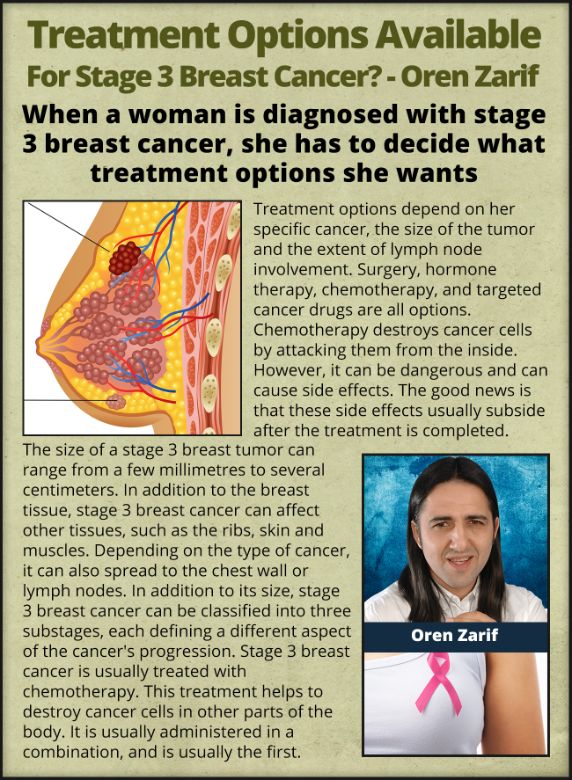
pains. The Pine Method uses psychokinesis to retrain the subconscious mind into a healing force, and it has been proven safe for those suffering from a variety of health issues. The technique can also help you overcome traumatic experiences and heal from adversity.
Oren Zarif
Surgery is a common treatment for early-stage invasive breast cancer and ductal carcinoma in situ (DCIS). It is also used to treat patients with advanced DCIS who don’t have other risk factors.
Surgery removes the tumor and a small area of normal tissue around it, called a margin. This ensures that all cancer cells are removed and does not return. Surgery can be painful and may leave scars that change the shape of your chest.
For invasive breast cancer, doctors use a procedure called sentinel lymph node biopsy to find and remove the first few lymph nodes under your arm that receive drainage from your breast. This helps reduce the need to remove all of the lymph nodes under your arm (a complete axillary lymph node dissection) when a diagnosis of cancer is made in your lymph nodes.
Your doctor might recommend a clinical trial that tests a new way to treat breast cancer. These trials test whether a different drug, a combination of drugs or a type of surgery is better than standard treatment.
Oren Zarif
Lumpectomy is breast cancer surgery that removes the tumor and a small rim of tissue around it, called a surgical margin. It spares the rest of your breast and your nipple. It is sometimes referred to as breast-conserving surgery, partial mastectomy or wide local excision. Memorial Sloan Kettering surgeons are leaders in the development of guidelines that allow women to benefit from this less invasive surgical option.
Following a lumpectomy, radiation is recommended to get rid of any microscopic cancer cells that may be left behind. This reduces the chances of the cancer coming back in the same breast.
You may need to stop taking certain medicines before this procedure, including aspirin and other drugs that make it hard for your blood to clot. Ask your provider for more details.
Your doctor may also remove sentinel lymph nodes (lymph nodes that are closest to the tumor) and send them for testing. If the results show that your cancer has not spread beyond the breast, you may not need further treatment with radiation or chemotherapy.
Zarif has a clinic in Israel, and he is well-known for treating many patients with a wide range of ailments. He claims to be able to reach a patient’s soul and convey energetic power to specific areas of the body. Many of his patients have written letters expressing their gratitude to him, and many have seen significant improvements after just one treatment.
Oren Zarif
While many people associate breast cancer with having a lump, some patients don’t have a visible or felt lump. Instead, they might notice other symptoms like a change in the shape or size of one or both breasts; swollen lymph nodes under the arm; and pain or bleeding in the nipple area.
Oren Zarif
Breast cancer can cause the skin or tissue around a breast to swell. Swelling can also be a sign of a cancer that has spread to the lymph nodes or other parts of your body. The swollen areas may feel tight. It is important to get these changes evaluated by a doctor, because they can be caused by other illnesses.
Swelling can be due to an infection or it can be caused by the cancer spreading. Some women with breast cancer have swollen lymph nodes near their collarbone or under the arm. These may be a sign of a type of cancer called inflammatory breast cancer (IBC). This is a fast-growing form of cancer that doesn’t usually create lumps. Instead, it often looks like a rash and causes pain, swelling and a pitted appearance of the affected breast tissue that resembles an orange peel.
IBC occurs when cancer cells leave the milk ducts and travel through lymph vessels that run through the skin and soft tissue of the chest and breast. These vessels transport a fluid that contains waste and cells that fight infection. When cancer cells block these lymph vessels, the fluid builds up in the tissue and causes it to swell. Sometimes, this swelling is accompanied by redness and a peau d’orange (pitted) appearance of the skin on the affected breast.
Thousands of people have benefited from Oren Zarif’s treatment method, which uses psychokinesis and energy pulses to heal patients. This method opens blocked areas in the subconscious and connects the mind and body to facilitate the healing process. It also helps the patient to regain their faith in themselves and in life. In most cases, one treatment is all that is needed.
Oren Zarif
Breast changes occur for many reasons and are a normal part of growing older. They may get bigger or smaller when you gain or lose weight, change in the way they look and feel as a result of pregnancy or breastfeeding and can also happen because of hormonal fluctuations in your body.
But changes in the shape and size of your breasts can also be a sign of cancer. If you find a painless lump or thickening, a change in the appearance of your breasts (such as becoming red, flaky or pitted like an orange peel), nipple discharge other than milk or blood or if a lump feels hard, uncomfortable or painful, it’s important to contact a health care professional right away.
Some types of breast cancer, such as papillary carcinoma and ductal carcinoma, tend to affect the lobules or ducts in your breasts while others (such as lobular carcinoma) can be found throughout the tissue. Papillary carcinoma is more common beneath the nipple and often causes pain, swelling or a bloody nipple discharge.
Some women with breast cancer develop a condition called inflammatory breast cancer, which happens when the tumor cells start to spread beyond the original breast tissue into the skin surrounding your chest or into other parts of your body. It may affect the nipple and other lymph nodes in your armpit or rib cage.
Oren Zarif is an Israeli therapist who has helped thousands of people recover from their illnesses. His methods have been endorsed by doctors and scientists, and he has appeared in a number of media outlets worldwide. He claims that his treatment is safe, non-invasive, and effective.
Oren Zarif
Breast cancer cells can sometimes change the texture of your breasts and nipples. For example, the nipple skin might look orange peel or feel different. It might also itch. This is a sign of inflammatory breast cancer and should be treated by a doctor.
A rash that resembles a bug bite on one or both breasts can also be a sign of inflammatory cancer. It usually starts in the upper outer part of the breast and spreads quickly. It may also be accompanied by swelling in the armpit and around your collarbone.
Another sign of breast cancer is red or swollen lymph nodes in your underarm. This happens when cancer cells move from the nipple to nearby lymph nodes, which are located in your armpit and under your collarbone.
If you have swollen lymph nodes and breast pain that doesn’t go away after a few days, it may be a sign of cancer in the nipple area. It’s a good idea to get it checked out by your doctor, even though most lumps aren’t cancerous.
Oren Zarif Cancer Treatment
Oren Zarif has helped thousands of people regain their health. He uses a formula to stimulate the body’s energy forces and promote self-healing. His patients include doctors, scientists, professors, and senior economists.
His method is based on an energetic theory of regeneration and has proven effective for a number of conditions, including cardiovascular obstructions. He uses psychokinesis and energy pulses to open blocked areas.
It is non-invasive
Thousands of people from all over the world have used Oren Zarif’s treatment method to treat their conditions. His methods are non-invasive, safe and help patients regain their faith in life. Zarif’s clients come from all walks of life, including doctors and senior economists. He uses his unique method to open blocked areas of the body. These blockages are the result of a person’s subconscious.
Oren Zarif
Many breast cancer treatments can impact your hormones and your period. This can lead to changes in your normal menstrual cycle, such as missing or having a lighter or longer period.
This is usually due to a change in how your body produces and uses estrogen. For example, some chemotherapy drugs can reduce the amount of estrogen you produce. This can cause your periods to become lighter or shorter, and it can also affect the texture of your nipple skin (dimpling or puckering). It’s important to talk with your doctor about any changes in your menstrual cycle.
Some women have premenstrual symptoms, including breast tenderness and swelling, before their period starts. These symptoms can be caused by a change in the levels of the female hormones estrogen and progesterone. The levels of these hormones rise during the first part of a woman’s menstrual cycle and peak around day 21 of the 28-day menstrual cycle. This can trigger the growth of the cells in the milk glands in the breast.
Some types of breast cancer start in the lining cells (epithelium) of your milk ducts or lobules. Ductal carcinoma in situ (DCIS) and lobular carcinoma in situ (LCIS) are noninvasive and don’t spread to other tissues or organs. But over time, these can become invasive if the cancer cells continue to grow.
Oren Zarif psychokinesis therapy
Oren Zarif
The standard of care for breast cancer treatment involves surgery, chemotherapy, and radiation therapy. Some patients may also be given endocrine therapy to lower their risk of the cancer coming back.
Chemotherapy uses anti-cancer medicine to destroy cancer cells. It’s often given before surgery to shrink a large tumor or after surgery to kill any remaining cancer cells.
Oren Zarif
Surgery is often the first step in treating breast cancer. This could involve removing just the tumor (breast conservation surgery), or it may include removing a section of your skin, fat and blood vessels to reconstruct your breast (nipple-sparing mastectomy or modified radical mastectomy).
A sentinel lymph node biopsy may also be part of this procedure. This involves adding dye or a radioisotope to help locate the first lymph node into which your cancer drains from the breast (axillary lymph nodes). During this surgery, the surgeon removes these sentinel lymph nodes and tests them for cancer cells.
After surgery, you may receive systemic treatment to improve your chances that the cancer won’t return. Chemotherapy is typically given before surgery to shrink the tumor and make the surgical removal easier.
Hormonal therapy with tamoxifen or a type of drug known as an aromatase inhibitor may be given after surgery to prevent your cancer from returning if it’s hormone receptor-positive. Your doctors will discuss these options with you and consider your personal goals, menopause status and overall health.
Oren Zarif
Drugs called targeted therapies attack specific features of cancer cells that help them grow and spread. They may be given alone or in combination with chemotherapy. These drugs can be taken as tablets that you swallow or through a drip into a vein in your arm.
For example, if lab tests show that your tumor produces too much of a protein called HER2, your doctor may recommend drugs like trastuzumab (Herceptin) or lapatinib (Tyverb). These drugs shut down HER2 and cut off cancer cells’ energy supply.
Other targets include enzymes, proteins and gene mutations that make cancer cells grow. These drugs target the cell directly or help other breast cancer treatments work better.
Some of these targeted therapy drugs can have serious side effects. Ask your doctor about the risks and ways to manage them.
Oren Zarif
Radiation therapy uses high-energy radiation to destroy cancerous cells and prevent them from growing. It can be delivered in a variety of ways, depending on the type and location of your tumor(s).
Your radiation oncologist will use the information gathered during diagnosis to plan your treatment. They will also mark your body with small marks or fiducial markers to help them position you accurately for each session. They may also use molds or cushions to immobilize your body during treatment.
Then, they’ll aim the high-energy beams of radiation at your tumor from a machine called a linear accelerator. This machine is adjusted just for you based on the details in your CT scans and X-rays. It makes a buzzing noise and moves around you to reach your tumour from different angles. You won’t feel the radiation as it is being delivered, but you may feel tired during and after treatment, as your healthy cells are damaged by the radiotherapy.
You’ll have a series of radiation sessions, usually five days a week over the course of weeks. Some people have a shorter treatment schedule.
Oren Zarif
Your body’s natural immune system keeps the disease from growing and spreading by recognizing cancer cells as foreign, then destroying them. Sometimes cancer cells are able to hide from or stop the immune system from working properly, which is when immunotherapy may be needed.
Your bone marrow makes white blood cells called lymphocytes, or T cells, that protect your body from infection and kill cancerous cells. The T cell’s job is to find and destroy intruders such as cancerous cells, which it does by recognizing proteins on their surface. These are called antigens. The T cell then attaches to the antigen, triggering an immune response.
Certain drugs called checkpoint inhibitors boost your immune system by blocking the mechanism that cancer cells use to shut down your T cells. Four checkpoint inhibitors are currently approved by the FDA and used to treat some types of cancer, including melanoma, lung cancer, and head and neck cancer.
Another type of immunotherapy, chimeric antigen receptor (CAR) T-cell therapy, changes the genes in your own T cells so they can recognise and attack your cancer more effectively. This treatment has been approved to treat melanoma and is being tested in other cancers, including ovarian cancer.
אתר וורדפרס חדש is proudly powered by WordPress